

Has your teenager come home from school complaining about pain in the back of their mouth? Or maybe you’ve been putting off dealing with that nagging ache behind your molars. When wisdom teeth start causing trouble, you might wonder if removal is your only option.
You don’t always have to get your wisdom teeth out. Removal depends on whether they’re causing problems or putting your oral health at risk. Many people keep their wisdom teeth for life without issues, while others need them removed to prevent crowding, decay, or gum disease.
What Are Wisdom Teeth?
Wisdom teeth are your third set of molars that typically appear between ages 17 and 25. Our ancestors needed these extra teeth to chew tough foods like roots, nuts, and raw meat. Modern diets with softer, cooked foods make wisdom teeth less necessary for chewing.
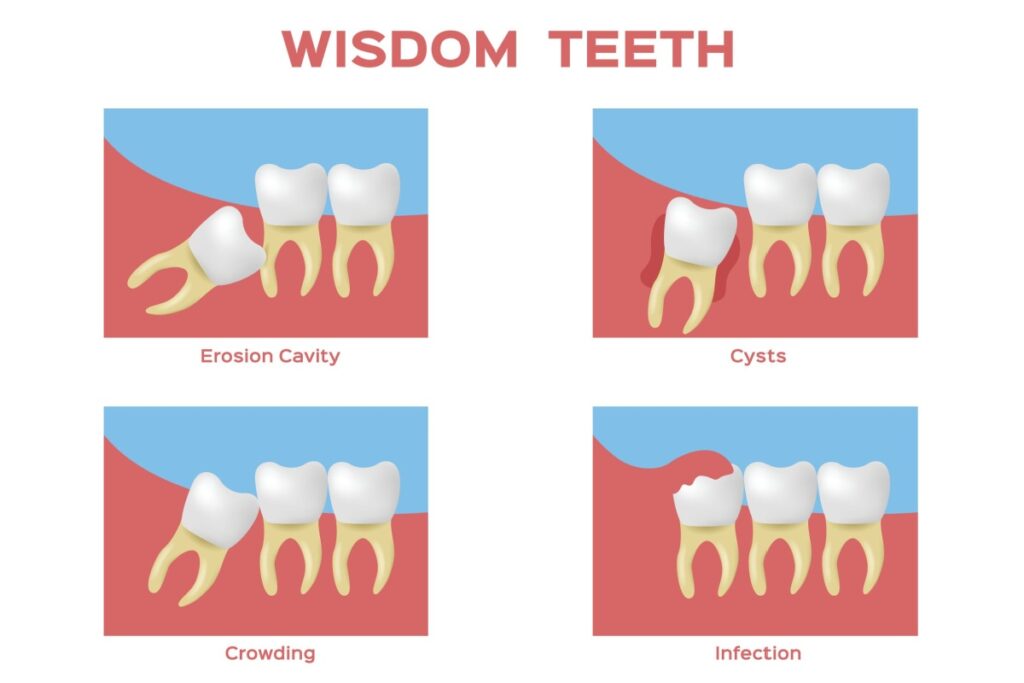
Your jaw has also evolved to become smaller over thousands of years. This means you often don’t have enough room for wisdom teeth to emerge properly. When there isn’t adequate space, problems can develop quickly as the wisdom tooth becomes impacted.
When your jaw can’t accommodate these large molars, complications can include:
- Crowding of existing teeth
- Impaction due to lack of space
- Difficulty cleaning properly
- Pain and discomfort
Signs You Might Need Wisdom Tooth Removal
Your body gives you clear signals when wisdom teeth cause problems. Dental emergencies can include wisdom tooth pain that requires immediate attention. You might notice these symptoms gradually or they can appear suddenly during eruption:
- Pain or tenderness in the back of your mouth
- Swelling around the gums
- Difficulty opening your mouth
- Bad breath that doesn’t go away
- Unpleasant taste in your mouth
Sometimes wisdom tooth problems develop without obvious pain. Impacted wisdom teeth can cause hidden damage to your oral health. Regular dental checkups help uncover these issues before they become serious:
- Gum disease around wisdom teeth
- Tooth decay in hard-to-reach areas
- Damage to nearby teeth
- Cyst formation
When You Can Keep Your Wisdom Teeth
Impacted wisdom teeth happen because your mouth becomes crowded, but sometimes you have plenty of space and wisdom teeth simply grow in. It’s possible for people to have none of their wisdom teeth, or to have only 1 or 2.
You can keep your wisdom teeth when they emerge properly and stay healthy. Healthy wisdom teeth share several important features that make them worth preserving:
- Fully erupted with adequate space
- Properly aligned with other teeth
- Easy to clean and maintain
- No signs of decay or gum disease
Dentists use X-rays and clinical examinations to evaluate your wisdom teeth. Dental X-rays reveal the angle of eruption and available space. Your dentist looks at your ability to clean these back teeth effectively.
Age also influences whether a dentist recommends removals. Younger patients often have easier recoveries if removal becomes necessary.
The Wisdom Tooth Removal Process
Your consultation includes a thorough examination and digital X-rays to see the position of your wisdom teeth. Your dentist explains your specific situation and discusses whether removal is recommended now or if monitoring might be appropriate. Sedation dentistry can help you feel comfortable during any necessary procedures.
The removal method depends on how your wisdom teeth have developed. Oral surgeons may need to perform more complex extractions when teeth are severely impacted:
- Simple extraction for fully erupted teeth
- Surgical removal for impacted teeth
Many people feel better within a few days after extraction. You’ll need to eat soft foods and avoid strenuous activity for about a week. Complete healing of the extraction site takes several weeks, but you can often return to normal activities much sooner.
Alternatives to Wisdom Tooth Removal
Your dentist may recommend monitoring your wisdom teeth rather than immediate removal. This approach works when your teeth aren’t causing current problems but need regular observation.
If your wisdom tooth erupts, but doesn’t need to be removed, proper care can help you keep it healthy for years. Focus on reaching these back teeth with your daily cleaning routine:
- Proper brushing techniques for back teeth
- Flossing around wisdom teeth
- Regular dental checkups
- Professional cleanings
Your dentist can show you specific techniques for cleaning these hard-to-reach areas. Water flossers can be particularly helpful for keeping the space around wisdom teeth clean.
We’re Here to Answer Your Questions
Crystal Smiles Dental understands that wisdom tooth decisions affect your whole family. Whether you need removal, monitoring, or just want to understand your options better, our team provides the gentle, thorough care your family deserves.
Schedule a consultation today to get personalized guidance about your wisdom teeth.