
Key Takeaways
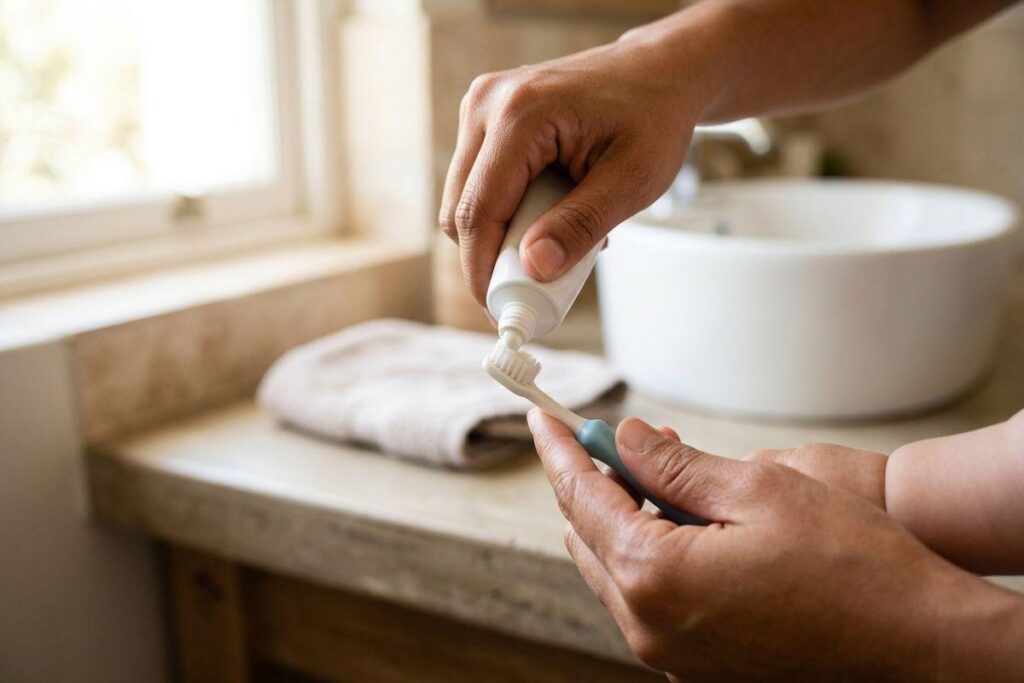
- Babies and toddlers under three need only a rice-grain smear of fluoride toothpaste.
- Kids age three to six can move up to a pea-sized amount.
- Too much fluoride swallowed over time can lead to white spots on teeth, a condition called fluorosis.
- Supervise brushing until your child can reliably spit instead of swallow.
- A family dentist in Okotoks can check your child’s brushing habits at regular checkups.
How Much Toothpaste Kids Need
You squeeze the toothpaste tube for your toddler and pause. Is that too much? Too little? Most parents have stood at the bathroom sink wondering the same thing before bringing their questions to Crystal Smiles Dental.
The amount of toothpaste your child should use depends on their age, ranging from a rice-grain smear for babies and toddlers to a pea-sized dab starting around age three. Getting this right helps protect growing teeth while keeping fluoride intake at a safe level, something the children’s dentistry team can help you monitor.
Why Toothpaste Amount Matters for Kids
Young children swallow toothpaste more often than they spit it out. That’s normal. Their mouth muscles are still learning how to coordinate rinsing and spitting, so extra paste tends to go down instead of out.
Swallowing small amounts occasionally isn’t a major concern. However, regularly swallowing too much fluoride during the years when adult teeth are forming under the gums can lead to fluorosis. This shows up as faint white streaks or spots on the teeth once they come in. Fluorosis doesn’t hurt and it doesn’t affect how the tooth functions, but it can change how the smile looks.
A family dentist can help you figure out the right amount for your child’s age and check for early signs of fluorosis at routine visits. If you’re searching for a dentist in Okotoks who works with kids of all ages, this guidance often starts at the first dental appointment.
Right Toothpaste Amount by Age & Stage
Babies and Toddlers Under 3
Once the first tooth appears, usually somewhere between six and twelve months, brushing can begin. Use a smear of fluoride toothpaste about the size of a grain of rice. Brush gently twice a day using a soft, small brush made for infants.
Kids Age 3 to 6
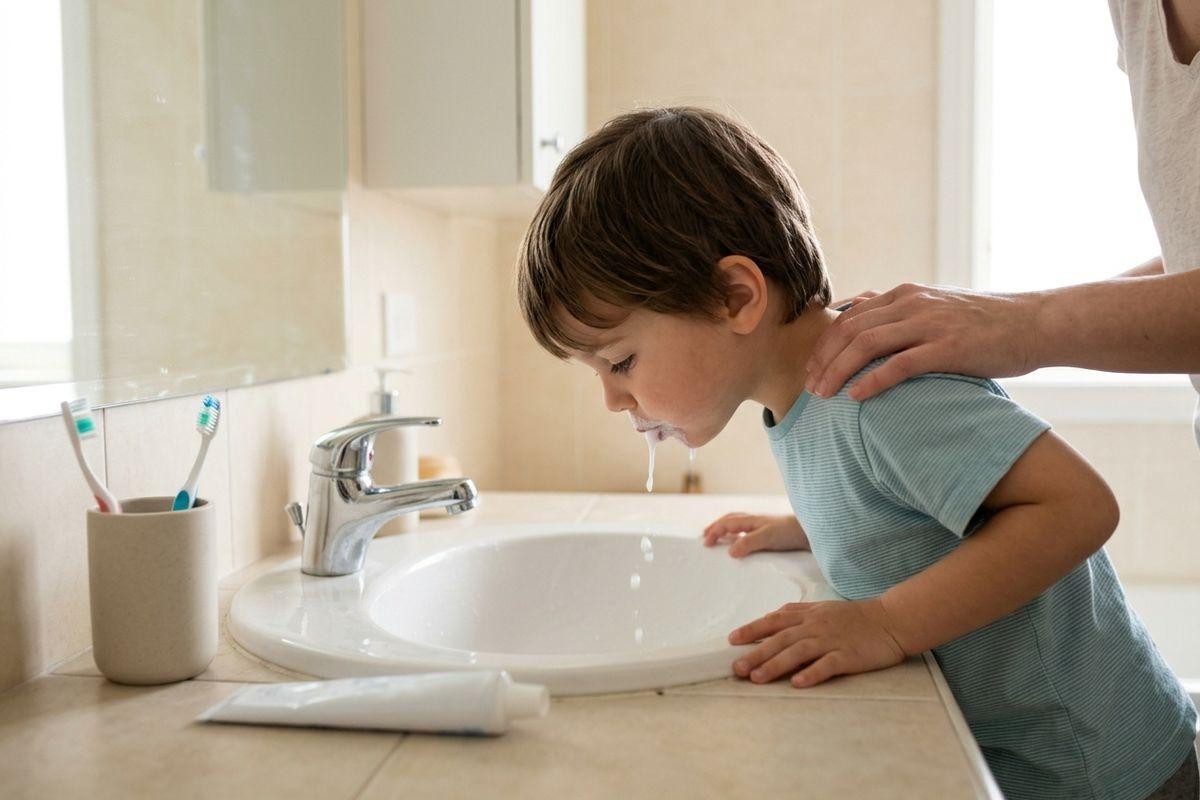
At this stage, kids can move up to a pea-sized amount of toothpaste. This is also the age to start reinforcing the habit of spitting out toothpaste instead of swallowing it. Stand nearby during brushing and remind your child to spit into the sink rather than gulp it down.
Kids Age 6 and Up
By age six, most kids can handle a pea-sized amount of toothpaste. Many children this age want to brush on their own, and that’s a good sign of growing independence. Still, keep an eye on the routine for a while longer. Check that they’re covering all surfaces, not rushing through it, and spitting properly when they finish.
Signs Your Child Uses Too Much Toothpaste
A few clues can tell you if your child needs a smaller amount or closer supervision during brushing.
- White spots or faint streaks appear on the teeth as they come in.
- Your child swallows toothpaste often instead of spitting it out.
- The mouth fills with foam quickly during brushing, which usually means too much paste is on the brush.
If you notice any of these, cut back on the amount of toothpaste and watch how your child brushes for a week or two.
Tips to Help Kids Brush Properly
Make Brushing a Routine
Set the same brushing times every day, right after breakfast and right before bed. Kids do better with routines they can count on. A two-minute timer or a favourite song can help your child brush long enough without losing interest halfway through.
Choose Kid-Friendly Products
Pick a fluoride toothpaste in a flavour your child actually likes, since mint can taste too strong for younger palates. Pair it with a soft-bristled toothbrush that has a small head sized for little mouths. Replace the toothbrush every few months or sooner if the bristles start to fray.
When to Visit an Okotoks Dentist for Kids
Plan the first dental visit around your child’s first birthday or shortly after the first tooth comes in. This early appointment lets the dentist check for proper tooth development and answer questions about toothpaste amounts, teething, and daily care.
After that, regular checkups and cleanings every six months help catch small issues before they turn into bigger ones. These visits also give the dentist a chance to spot early signs of fluorosis or cavities while they’re still easy to manage.
As kids get older, some may need help with crowding or bite alignment. Invisalign options may be available for older kids and teens who need straightening without traditional metal brackets, giving families a discreet path toward a straighter smile.
Crystal Smiles Dental works with families at every stage, from that first tiny tooth to teenage orthodontic questions. Reach out to schedule your child’s next checkup and get toothpaste guidance suited to their age and needs.